
Plastic waste is one of the most pressing environmental challenges today. With millions of tons of plastic discarded annually, recycling is no longer optional—it’s essential. Businesses worldwide are turning to plastic recycling solutions to reduce costs, protect the environment, and create sustainable products like molded plastic pallets.
In this article, we’ll cover:
- Why plastic recycling matters
- Which plastics are suitable for pallet production
- The recycling process explained
- How your business can benefit from eco-friendly pallets
- Recommended equipment and solutions
- FAQs about plastic pallet materials

Why Recycle Plastic?
Plastic recycling offers multiple benefits:
- Environmental Impact: Reduces landfill waste and ocean pollution.
- Cost Efficiency: Recycled plastics are cheaper than virgin materials.
- Compliance & Sustainability: Meets global regulations and supports green initiatives.
Best Plastics for Pallet Production
Not all plastics are created equal. For molded pallet manufacturing, the most suitable materials are:
- PP (Polypropylene) – Excellent strength and chemical resistance.
- PE (Polyethylene) – Flexible and durable.
- HDPE (High-Density Polyethylene) – High load-bearing capacity and moisture resistance.
Important Note
- Foamed plastics (EPS, PU) and PET cannot be used for pallet production due to their structural limitations.
Plastic Recycling Process
- Collection & Sorting
Separate plastics by type for efficient processing. - Shredding & Washing
Clean and reduce the size for melting. - Melting & Pelletizing
Convert plastics into granules for reuse. - Molded Pallet Manufacturing
Use recycled PP, PE, or HDPE to produce strong, export-ready pallets.
Benefits of Recycled Plastic Pallets
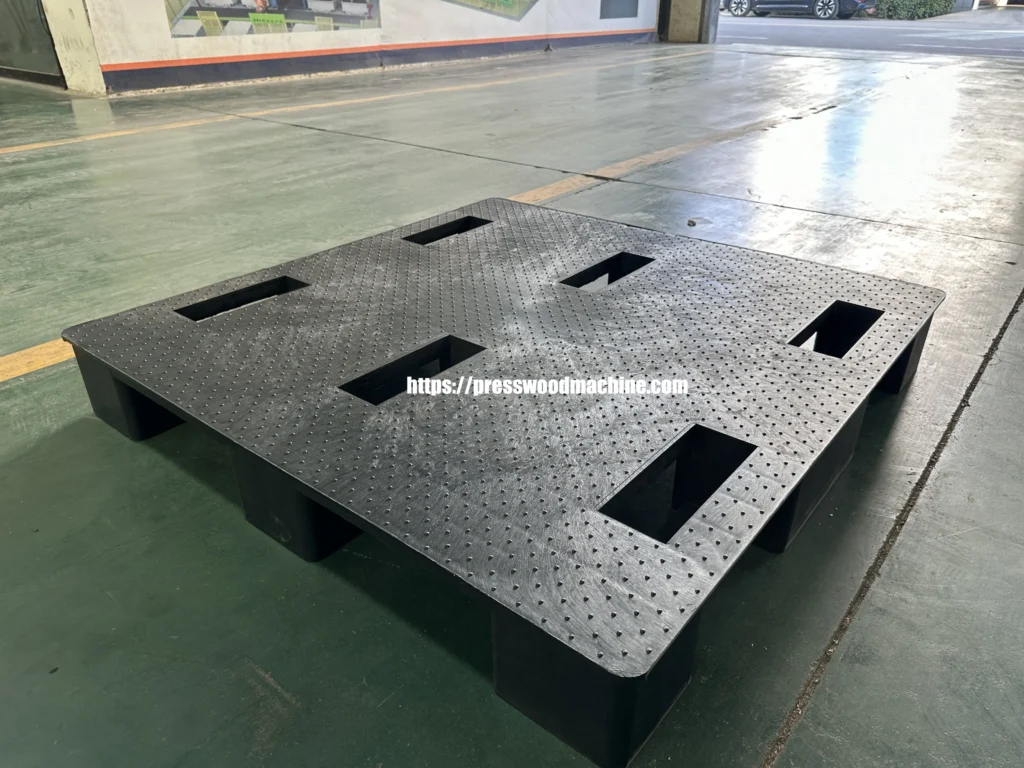
- Durability: Long-lasting and resistant to moisture.
- Cost Savings: Lower material costs compared to virgin plastic.
- Eco-Friendly: Supports sustainability and reduces carbon footprint.
- Export Compliance: ISPM-15 exempt, ideal for international shipping.
FAQs About Plastic Pallet Materials
1. Can PET be used for pallet production?
No. PET (Polyethylene Terephthalate) is commonly used in bottles but is not suitable for molded pallet manufacturing due to its brittleness and processing limitations.
2. Can foamed plastics like EPS or PU be used?
No. Foamed plastics are lightweight and contain air pockets, making them unsuitable for strong, load-bearing pallets.
3. What are the best plastics for pallets?
The best materials are PP, PE, and HDPE because they provide strength, durability, and resistance to moisture and chemicals.
4. Why choose recycled plastics for pallets?
Recycled plastics reduce costs, minimize environmental impact, and create durable pallets that meet export standards.
5. Do I need special equipment to recycle plastics for pallets?
Yes. You need shredders, washing systems, pelletizers, and molded pallet machines designed for PP, PE, and HDPE.
Visit PresswoodMachine.com or PalletsBiz.com for complete solutions.
Our Solutions
At PalletsBiz, we specialize in:
- Plastic Recycling Equipment: Designed for PP, PE, and HDPE.
- Molded Pallet Machines: Transform recycled plastics into high-quality pallets.
Ready to Start?
Turn your plastic waste into profit.
Visit PresswoodMachine.com or PalletsBiz.com to learn more about our recycling and pallet solutions.