
In the production of presswood pallets (also known as molded wood pallets), mold heating plays a critical role in ensuring product quality, production efficiency, and compliance with international standards.
This article examines the necessity of heating the mold, the equipment used in this process, and the optimal temperature range for manufacturing high-quality presswood pallets. We’ll also examine the four key factors—press machine pressure, mold design, mold temperature, and adhesive type—that determine pallet quality and efficiency, with a special focus on the impact of mold temperature.

Why Is Mold Heating Necessary in Presswood Pallet Production?
Heating the mold during presswood pallet production serves multiple purposes, from facilitating adhesive curing to meeting global shipping regulations. Here’s why it’s an indispensable step:
- Curing Thermosetting Adhesives
Presswood pallets are typically made using thermosetting adhesives such as urea-formaldehyde (UF), phenol-formaldehyde (PF), or MDI (methylene diphenyl diisocyanate). These adhesives require heat to bond with wood chips and solidify. For example:- Urea-formaldehyde (UF) cures at 160°C to 180°C.
- Phenol-formaldehyde (PF) often requires temperatures above 160°C.
- MDI glue operates effectively between 130°C and 180°C in pallet production.
Proper mold heating ensures the adhesive cures fully, creating a strong, durable pallet. For more details on adhesive options, refer to resources like Glue for Presswood Pallet Production: Comparing UF, MUF, and MDI Adhesives.
- Enhancing Wood Chip Plasticity
Heating improves the plasticity of wood chips, allowing them to mold more effectively under pressure. This enhances the pallet’s strength, stability, and surface quality, resulting in a consistent, high-quality finished product. - Boosting Production Efficiency
Optimal mold temperatures accelerate adhesive curing and the bonding process between wood chips and glue. If the temperature is too low, curing slows down, leading to incomplete bonding, reduced efficiency, and higher defect rates. Properly heated molds streamline the production cycle, increasing output without compromising quality. - Eliminating Pests for International Compliance
According to the International Plant Protection Convention (IPPC) and its ISPM 15 standard, wood packaging materials (including pallets) used in international trade must undergo pest control treatment to prevent the spread of harmful organisms like insects, larvae, and fungi. Heating the mold kills these pests within the wood, making presswood pallets export-ready without additional fumigation.
Equipment Used for Mold Heating in Presswood Pallet Production
Several heating methods and devices are employed in the industry, each with its advantages and limitations. Here’s an overview of the most common options:
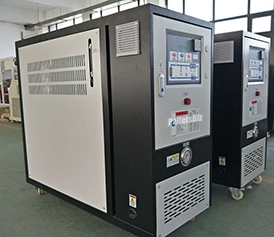
- Mold Temperature Controller (Oil-Based)
- How it works: Uses thermal oil as a heat transfer medium, circulating it between the controller and the mold for efficient heat exchange.
- Advantages: Compact, fast heating, easy to operate, and dedicated to a single press machine.
- Best for: Small to medium-scale production.
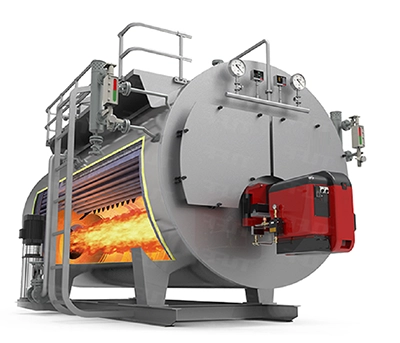
- Thermal Oil Boiler
- How it works: Circulates thermal oil from a central boiler to multiple molds via pipelines.
- Advantages: Centralized heating simplifies management.
- Disadvantages: Requires a dedicated boiler area and extensive piping; a boiler failure halts all production.
- Best for: Large-scale, multi-machine operations.
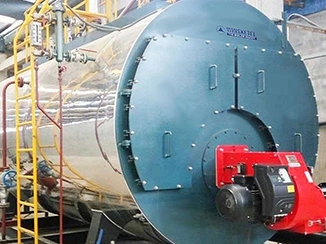
- Steam Boiler
- How it works: Uses superheated steam as the heat medium, circulated between the boiler and molds.
- Advantages: Centralized and efficient for high-volume production.
- Disadvantages: Similar to thermal oil boilers, it needs separate space and piping, with downtime risks if the boiler fails.
- Best for: Industrial-scale manufacturing.
- Electric Heating (Heating Tubes or Wires)
- How it works: Directly heats the mold using electric heating elements like tubes or wires.
- Advantages: Rapid response and precise temperature control, ideal for small or specialized production.
- Disadvantages: High electricity consumption increases operational costs.
- Best for: Precision or low-volume production.
What Is the Ideal Mold Temperature for Presswood Pallets?
The optimal mold temperature for presswood pallet production typically ranges between 150°C and 180°C. This range balances efficiency and quality while avoiding common pitfalls:
- Wood chip ignition point: Wood chips begin to burn at around 210°C. Excessive heat can cause pallet surfaces to yellow or blacken due to charring.
- Heat penetration: Pallets, with a typical thickness of 10mm to 15mm, require time for heat to transfer from the surface to the core. After removal from the mold, residual heat continues the curing process, which is why pallets are left to cool for 2 to 24 hours to achieve maximum strength.
Choosing the right adhesive is also critical. Fast-curing glues paired with appropriate mold temperatures and press machine pressure ensure efficient production and durable pallets.
Key Factors Affecting Presswood Pallet Quality and Efficiency
While mold temperature is vital, it works in tandem with three other factors:
- Press Machine Pressure: Higher pressure improves compaction and bonding.
- Mold Design: Well-designed molds ensure uniform heat and pressure distribution.
- Mold Temperature: As discussed, it drives adhesive curing and pest control.
- Adhesive Type: The glue’s curing temperature and speed directly influence production outcomes.
For businesses seeking high-quality presswood pallet production equipment, companies like PalletsBiz—a pioneer in molded pallet machinery—offer end-to-end solutions, from mold design to installation. Contacting them for consultations or quotes can provide tailored insights.
Conclusion: Optimizing Mold Heating for Presswood Pallet Success
Heating the mold in presswood pallet production is non-negotiable—it ensures adhesive curing, enhances wood plasticity, boosts efficiency, and meets international shipping standards like ISPM 15. By selecting the right heating equipment (e.g., mold temperature controllers or thermal oil boilers) and maintaining temperatures between 150°C and 180°C, manufacturers can achieve superior pallet quality and streamline operations. Pairing this with high-pressure press machines, smart mold designs, and suitable adhesives unlocks the full potential of presswood pallet manufacturing.
For more information on presswood pallet production or to explore industry-leading solutions, reach out to experts like PalletsBiz, a trusted name in the field.